Lessons From the Past: Building a Public School System That Learns, Listens, and Lasts
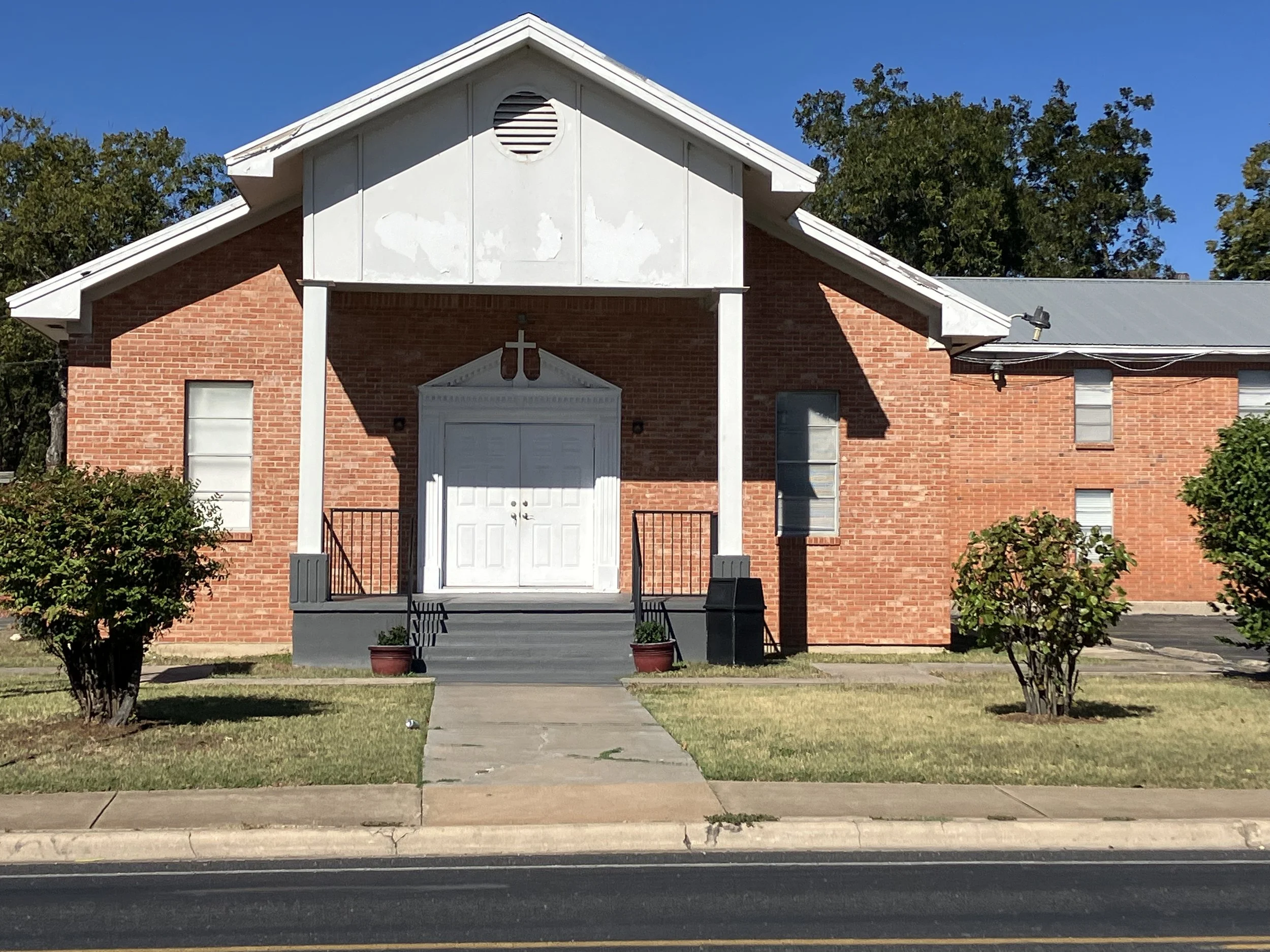
Pictured: Greater Calvary Bible Church in Northeast Austin, where the Eastside Social Action Coalition is hosting a community conversation with Superintendent Segura on October 28, 2025, to gather feedback on Austin ISD’s draft School Consolidation and Boundary Change Plan.
The opinions I share here are my own—not on behalf of any community, school, or organization. I do not speak for every family or community—only from what I’ve seen and experienced as a parent, educator, and neighbor in Northeast Austin. My reflections come from years within Austin ISD, where questions of belonging, access, and equity shape daily life. Others have a different perspective and lived experience and see things differently, and I welcome that conversation.
Grounding in Lived Experience
It hasn’t been easy to stay grounded during this tumultuous, in-between state we’re in as a public school community in Austin ISD—especially with systemic attacks on public education targeting larger, more progressive Texas cities like Houston ISD and now Fort Worth ISD. Slowly but surely, similar state-control tactics are creeping into Austin ISD: Third Future at Mendez, more Turnaround Plans with 1882 contingencies, the rigid demands of Lone Star Governance, and the deeply flawed A-F state accountability system. Alice Linahan puts it well in her piece—The Takeover of Texas Public Schools: Mike Morath, AJ Crabill, TPPF and the Tyranny of “Lone Star Governance.”
Dr. Pat Huff, a leading authority on Texas’ flawed accountability system, has long explained how the state’s A–F grading formula was built to guarantee failure. Once a district is branded “F-rated,” TEA can justify dissolving the elected board and installing unelected managers.
This is the pattern. Declare failure, take over, and call it progress.
The result is not local improvement but state control.
Meanwhile, budget cuts, policy shifts, and attacks on identity—from book bans to anti-trans legislation and Christian-based curricula—signal a broader effort to shrink the purpose of public education itself.
And yet, as a sixth-generation Texan, I joke with my partner: “I’m no delicate fl-air.” The fight for public education has always required thick skin—and deeper conviction.
So I keep returning to one question:
How can we design a public education system that builds more long-term belonging, stability, and access—rather than more competition, displacement, and scarcity?
That question grounds me when everything else feels uncertain.
Neighborhood Schools and the Fragile Ecosystem of Access
I’ve come to believe that anything worth tending to asks us to stay through the hard seasons—to be in community and draw strength from the advocates and neighbors who’ve held this place for decades. People like Ms. Miller and Dr. Sterling Lands II (founder of the East Austin Social Action Coalition) remind me what that kind of steady presence looks like. They continue to show up.
Living and working in East and Northeast Austin has made me acutely aware of how unevenly opportunity is distributed, even among families in the same zip code. East Austin feels very different than it did twenty years ago when I first moved to Austin—and even thirteen years ago, when I was renting in Pecan Springs without central air and the former airport site had little more than a Best Buy. Now I live in Windsor Park, just a few blocks away, but so much has changed in a relatively short time. The shift in who can afford to stay tells its own story. As gentrification and rising housing costs have reshaped neighborhoods like Pecan Springs, Windsor Park, and University Hills, many longtime families have been priced out or pushed farther east or far beyond city limits.
I saw similar shifts when I lived in 78702 from 2015 to 2019, near Oak Springs Elementary, which has long served families living in the Booker T. Washington Terrace Apartments. Like many East Austin schools, Oak Springs holds a deep community ties—and yet it faces closure and the same pressures of displacement that have pushed generations of Black and Brown families out of central Austin. Studies show that school closures in Texas disproportionately impact Black students and neighborhoods already destabilized by housing and zoning inequities, and that the effects of those closures can last a lifetime (Education Week, 2024).
In my zip code, 78723, I’ve noticed these same themes repeat. Take Mueller, for example, a relatively new planned community known for its thoughtful design and density. At a recent community meeting, a resident described themselves as part of a YIMBY community (Yes In My Backyard). They spoke with pride about welcoming new development and families into their neighborhood and about sharing their slice of the city — new parks, commercial and green spaces, and bikeable paths — for all of Austin to enjoy. Yet they also expressed concern that the same inclusive vision has not extended to our public schools or to local advocacy efforts for their neighborhood. It’s a reminder that educational access depends not only on design and new buildings but on the vision, systems, leadership, and commitments that sustain it.
Despite a growing number of young families, Mueller still has no elementary school within its boundaries, and its only middle school has been non-zoned since opening. Nearby campuses such as Maplewood, Blanton, Campbell, and Kealing have long served as the closest public school options for Mueller families. When Maplewood was proposed for closure, it wasn’t just Cherrywood that felt the loss—the impact rippled across every nearby neighborhood connected through that fragile web of access.
The district’s new proposals add another layer of complexity: some students who live in Mueller would not be zoned to Marshall, further fracturing the sense of continuity and connection that neighborhood schools are meant to provide. The challenge isn’t about one neighborhood—it’s about how planning for growth and access across Austin has too often reflected the same inequities we see in our schools. City planning decisions about housing, transit, and development have long shaped who gets access to stability and opportunity. Educational planning is no different: it deserves that same level of intentionality, with community input at the center.
These local ripple effects are part of a larger pattern across the district. “Austin ISD’s enrollment has dropped to a 30-year low,” according to the Statesman highlighting how declining student numbers complicate decisions about school closures and program funding.
As a parent, I feel those ripples: every closure, boundary, zoning decision, and “choice” option that fractures neighborhoods and displaces students. One adjustment to a boundary line can reshape who children grow up alongside, who parents advocate with, and which schools remain viable.
This pocket of Northeast families in 78723 once followed a clear pathway—for example, Andrews, Harris, Winn, Pecan Springs, Blanton→ Pearce (now Bertha Sadler Means)→ LBJ. Now, households just blocks apart in the same neighborhood might split across entirely different vertical teams. These invisible lines alter who we see, who we know, and who we fight for. They can build bridges—or deepen divides. And when someone feels pushed out—a student, family, teacher, a school or a leader—the wound runs deep.
The View from the Ground
From my experience and conversations, I’ve noticed that many East Side families express the same hopes as families across Austin—the desire for equitable opportunities and lasting stability, like those long afforded to some West Side schools. What I’ve heard again and again is that families’ needs aren’t complicated. They want schools close to home, early childhood options like full-day PK3 and PK4, and free and robust afterschool programs that make working families’ lives manageable and intervention embedded. They want clear and equitable academic pathways—dual language, fine arts, STEM, special education, and advanced coursework that are resourced consistently across campuses. They want reliable transportation and steady leadership that keeps great teachers in place, all within a well-defined path from elementary through high school. And I would add one more piece: a renewed emphasis on local control.
What complicates things isn’t families’ needs; it’s the web of systems and competing priorities around them—maximizing building use, aligning feeder patterns, increasing socioeconomic diversity (SES), managing budget pressures, and avoiding multiple “F” ratings in the state’s inequitable A–F accountability system—all while trying to preserve local control under the threat of TEA intervention. On paper, the plan may look strategic. On the ground, it often feels like displacement.
That’s why the lived experiences of disproportionately impacted families must shape every major decision. If we aren’t listening to all voices, we’re missing the real story and the key stakeholders.
In East and Northeast Austin, I hear community members say they are tired of being told change is for their benefit when the benefits never reach them. I perceive the need as continuity and resourcing, not constant restructuring; stability, not the illusion of “choice.”
If you have a child with a disability, if you’re queer, an immigrant, Black or Brown, neurodivergent, or part of a community that has had to work simply to be seen and heard, you may recognize the feeling of searching for belonging within systems that weren’t designed with everyone in mind. These intersecting realities remind us that not everyone begins with the same access to “choice.”
I can see how linking systemic reforms with consolidation might seem reasonable—especially amid mounting accountability pressures and budget constraints. But when those plans overlook the lived experiences of the people most historically underserved—particularly where non-zoned programs disrupt feeder patterns or create new barriers—they risk repeating the same harmful cycle. Communities like Pickle, Sanchez, Govalle, and Oak Springs bring strong voices and clear ideas to these conversations.
That’s the piece still missing from our planning—and it ultimately determines whether a proposal truly serves students. The question isn’t just where young families will go to school; it’s whether our systems foster genuine access, stability, and belonging for all families, including those who’ve already built a school home but now feel displaced or disregarded.
The theme of belonging and displacement has followed me throughout my AISD journey—from a special education teacher in Southeast Austin, to an instructional coach in Northeast Austin, and now as a parent in Windsor Park. I keep wondering why this pattern keeps showing up—why our communities are asked to rebuild, again and again, instead of being given the stability and time to grow.
The Search for Stability
That question is inevitably connected to the rise of charter schools. When families lose trust that their neighborhood schools will remain open, resourced, or consistent, they search for stability wherever they can find it. I will never judge a family for making that choice. Still, what I hear again and again in community meetings is concern that East Austin will lose even more students to charters under these proposed changes.
Dobie Middle School, for example, lost more than 600 students to nearby charters last year (Decibel PBS Austin). When enrollment drops, schools lose not just funding, but community cohesion and a sense of stability. Even with new boundaries and consolidations, I believe we’re still missing what families in Northeast Austin say they need most: schools close to home, reliable transportation, strong academic programs including dual-language, and a clear, continuous pathway from elementary through high school.
As a parent, my priorities are aligned. I want proximity, consistency and continuity, and strong leadership that keeps teachers rooted in the community. Many community members echo that desire. I am also hearing voices say they want at least one clear, viable ES–MS–HS pathway that’s zoned, protected, and aligned with their neighborhood who have historically gone to the same high school. A 1996–1997 AISD feeder pattern map, shared by Nadia Khan and sourced by Gloria Neunaber, offers a snapshot of how these dynamics were structured nearly thirty years ago. The reasons behind those changes (including school closures and rezoning or renaming schools) are complex and deserve their own deep dive in a future post.

A 1996–1997 AISD feeder pattern map, shared by Nadia Khan and sourced by Gloria Neunaber
Right now, that vision of a stable neighborhood school feels fragile. The Northeastern Crescent continues to absorb the weight of overlapping pressures: charter expansion, state-mandated Turnaround Plans, under-enrolled non-zoned schools, and fractured feeder patterns. Some of these changes—though well researched and intentioned—don’t actually serve the communities they aim to help. The idea of a well-resourced neighborhood school can start to feel like a fairy tale. Honestly, that’s how it feels.
We’re all navigating a system that asks families and educators to make impossible choices within structures never built to serve everyone fairly. And yet, Austin ISD still holds a profound public promise—to provide every child access to a free and equitable education, a promise grounded in both law and shared responsibility. That’s why I remain a passionate (and admittedly opinionated) educator and advocate. Because no private or charter network carries that same obligation to every child in our city. Public schools do, and that responsibility is worth protecting.
Enter the incredibly difficult proposal of closing schools. For the record, I’m against closures—and I also deeply value our AISD leadership and trustees, who have been tasked with the impossible: deciding which schools to close or keep open in a time of desperate circumstances, while trying to ensure academic integrity for every student, in every zip code.
I get emotional writing this because I know this job requires both heart and stomach—the courage to make decisions that are impossibly difficult and complex. These are not easy calls, and they’re being made under immense pressure to preserve as much local control as possible in a political climate that has made public education feel increasingly unstable.
But I also believe we need to rethink how special programs are created with communities and sustained by them. It’s not that I don’t value strong academics or creative models—I do—but I’ve seen how well-meaning programs can quietly pull students, staff, and energy away from already-stretched neighborhood schools.
The proposed non-zoned changes risk deepening that divide. They chip away at the idea of a true neighborhood school—a place anyone nearby can attend. When programs are designed without broad input, they can end up feeling exclusive, even elitist. And when new initiatives grow faster than the cultures meant to sustain them, belonging suffers. Creating a learning environment that truly welcomes every child takes more than strong academics—it takes honesty about bias, fair transfer policies, special education support, and zoning practices that protect access for all families.
As long-time East Austin families know too well, this pattern keeps repeating: displacement under new names.
Patterns, Then and Now
In researching this topic, I came across a 25-year-old Austin Chronicle article titled, “Sterling Lands New Mission.” The parallels between then and now are striking. The same concerns East Austin leaders voiced in the 1990s could be copy-pasted today:
Magnet expansion versus neighborhood stability
Gaps between “regular” and “special” programs
Calls for rigor and equity in East Austin schools
Community mistrust and uneven access to resources
It’s sobering how little has changed in twenty-five years. The past isn’t past—it’s just been rebranded. These tensions remind us that we must look at our history clearly if we want to stop repeating the same mistakes under new names.
The enduring question remains: Can Austin ISD design a system where innovation and equity truly coexist—without one undermining the other?
I believe it’s possible. Innovation shouldn’t come at the expense of community—it should grow out of it. When programs are designed with community input, they can expand opportunity without destabilizing the schools that already serve those students.
If AISD truly commits to resourcing every campus, then a Northeast model—a magnet, fine arts academy, or hybrid partially zoned school—could complement, not compete with, neighborhood campuses. The goal should be simple: expand access and opportunity for historically underserved students while protecting the stability that families need to thrive.
Perhaps the real question is—does stability create the conditions for innovation, or does innovation strengthen stability? Maybe the answer lies somewhere in between for our education ecosystem. What’s clear is that the community must be part of that conversation.
If we prioritize cultural representation as a foundation for programming, what would that look like across every school—through fine arts, athletics, and advanced academics alike? Perhaps that’s the compromise: innovation grounded in representation.
I hope we learn from what came before us and finally design special programs that serve all students well—programs built with community priorities rather than imposed from above.
Leadership and Hope
We’ve already seen glimpses of what that balance can look like. East Austin schools like Eastside Early College High School (go Panthers!) have built strong pathways under the leadership of Dr. Thames. Moving from an “F” to a “D” rating took real strategy, commitment, and steady work against a flawed accountability system. The progress is genuine—and it’s a reminder that strong and sustained leadership matters.
Her leadership reminds me of what I experienced at Perez Elementary during the transition from Dr. Kauffman to Kara Mitchell Santibañez. I never met Dr. Kauffman when I started at Perez in 2017, but I could feel the legacy he left behind in the experienced, committed teachers who carried his vision forward and many have excelled as inspired local leaders and advocates—that’s the mark of strong leadership.
I feel the same way about Blackshear Elementary Fine Arts Academy. Their programming, leadership, and legacy speak for themselves. As both an educator and a parent, I can tell you: leadership makes all the difference. Ask any teacher who’s worked under both strong and weak leadership—you can hear it in their voice.
Why I Stay
At the end of the day, this isn’t about buildings, test scores, or branding. It’s about people, relationships, and the neighborhoods that raise our children. Every decision touches real lives, and the ripple effects of these decisions can last for decades.
Still, I remain hopeful. I’ve seen what happens when educators, parents, and neighbors show up with care and persistence. A public school system where every student has a well-resourced school may not be our current reality—but we’ve been here before, and we’ve made progress before. Just ask the advocates who are still here, thirty years later, still showing up, still believing that public schools are worth fighting for.
That’s what gives me faith: the people who stay. Because persistence is progress. Every meeting attended, every vote cast, every letter written, every seed of advocacy planted—it all matters.
That’s why I stay. That’s why I speak up. If we keep lifting strong leaders, listening to our communities, and demanding thoughtful, sustained solutions, we can build public schools that better serve every family in Austin ISD. Our children deserve nothing less—and history shows us this fight for public education is ongoing. It’s up to us to carry it forward.
H. E. Wong (she/they) is a queer and neurodiverse presence-based coach, former public school educator, and co-founder of two community-centered collectives. With a background in yoga and somatic practice, they bring a human-centered approach to their work at the intersections of story, systems, and collective change. Based in Austin for two decades, they write and create space for dialogue that explores systems and their impact on people.